
The floor is an uncommon surface in modern living spaces. Most daily routines take place between the chair, the car seat, and the bed. As the body spends less time near the ground, the hips adapt to narrow, upright angles. Over decades, this adaptation limits the range of the joint.
Returning to the floor restores access to functional ranges. Floor sitting asks the pelvis and thighs to rotate, flex, and bear load without artificial support. This article presents five simple habits designed for home practice. Each habit relies on body weight, steady breath, and gravity.
Why hip rotation declines after forty-five
The hip joint is a ball and socket. It depends on movement in every direction to circulate synovial fluid. This fluid nourishes the cartilage and clears cellular debris. When movement stays inside a small zone, fluid distribution decreases.
Internal and external rotation suffer first. Most adults walk in straight lines and sit on level chairs. These activities use flexion and extension in a single plane. Rotational angles rarely receive mechanical stimulus during an average day.
Connective tissues respond to habitual positions. Tendons, joint capsules, and ligaments shorten when left unchallenged. Around age forty-five, the cumulative effect of sedentary hours becomes noticeable in the lower back and knees.
| Movement plane | Daily exposure in chair seating | Floor sitting demand |
|---|---|---|
| Flexion | Fixed at roughly ninety degrees | Varies between forty and one hundred thirty degrees |
| Internal rotation | Nearly absent | Active under modest pelvic load |
| External rotation | Slight or absent | Sustained through ground contact |
| Abduction | Static and narrow | Broad and self-adjusting |
When the hips do not rotate, the lumbar spine and knees rotate instead. Neither structure is designed for large rotational loads. Restoring natural hip play helps protect these neighboring areas from unnecessary strain.
The ninety-ninety seated transition
The ninety-ninety position targets internal and external rotation at the same time. One leg rests in front of the pelvis, rotated outward. The other leg rests behind or to the side, rotated inward. Both knees rest on the mat at right angles.
This shape reveals differences between the left and right sides. Many people find the trailing hip lifts off the ground. That lift is normal when internal rotation is limited. Use a small folded blanket under the front hip to level the pelvis.
Positioning the body
- Sit on a firm rug or yoga mat.
- Place the front thigh straight ahead. Bend the front knee to ninety degrees so the shin runs perpendicular to the torso.
- Place the rear thigh out to the side. Bend the rear knee to ninety degrees so the rear shin points behind you.
- Flex both feet to protect the knee ligaments.
- Place your fingertips on the floor for balance.
Executing the transfer
Keep your heels glued to the floor. Lift both knees toward the ceiling while keeping the chest wide. Let the legs sweep across the center line. Land in the ninety-ninety position on the opposite side.
Move slowly through the middle of the transition. The transfer should take four to six seconds. Avoid swinging the shoulders to build momentum. Let the deep rotators do the work of driving the movement.
Complete six transitions per set. Rest for twenty seconds between sets. Perform two sets in total. If you feel pinching inside either hip joint, stop immediately. Joint pinching suggests bone-on-bone impingement that requires review by a physical therapist.
Supported deep squats against a doorframe
A full squat is a resting position for many human cultures. In modern homes, the ankles and calves often restrict deep knee flexion. A doorframe provides balance and removes shear stress from the lower back.
Using the frame allows you to sit deeply without fear of falling backward. The torso stays upright, which creates space inside the pelvic bowl. The hip capsules open under relaxed body weight rather than tension.
Entering the squat
- Stand facing an open doorframe.
- Place your feet shoulder-width apart. Turn the toes outward by roughly twenty degrees.
- Grip the wood of the doorframe with both hands at chest height.
- Inhale into the abdomen.
- Exhale and lower the hips straight down between the heels.
Let the pelvis sink below the knees if your joints allow it comfortably. Keep your weight centered across the entire foot, from the big toe to the heel. Do not let the inner arches collapse inward. Use your hands to hold as much weight as needed.
Breathe into the back of the pelvis for sixty seconds. Keep the neck soft and the gaze level. Repeat this hold three times throughout the late afternoon or evening.
If your heels rise, place a rolled towel under them. Elevating the heels by two centimeters reduces demand on the calf complex. Over several weeks, gradually reduce the thickness of the support as the tissues adapt.
Low lunges for hip flexor ease
Prolonged sitting leaves the psoas and rectus femoris in a shortened state. These tissues cross the front of the hip and anchor to the pelvis and spine. Tightness here creates an anterior pelvic tilt and pulls on the lower lumbar vertebrae.
A low floor lunge allows these anterior tissues to lengthen under body weight. The key is to keep the pelvis neutral rather than overarching the lower spine. A small, controlled stretch works better than extreme flexibility shapes.
Setting the stance
- Begin on all fours on a padded mat.
- Step the right foot forward between the hands.
- Align the right knee directly above the right ankle.
- Slide the left knee back until you feel tension across the front of the left thigh.
- Place a flat cushion under the rear knee for comfort.
Tuck the tailbone slightly downward. This gentle posterior tuck immediately increases the stretch across the hip flexors. Keep the torso tall. Avoid sagging the lower back toward the floor.
Rest your hands on the front knee or keep fingertips on yoga blocks. Hold the position for forty-five seconds without bouncing. Breathe quietly through the nose. Switch sides and repeat the sequence for the right hip.
Perform two rounds per side. Focus on releasing muscular tension around the front of the hip on every exhalation. If you experience tingling or numbness down the leg, reduce the depth of the lunge.
Integrating floor time into evening routines
Exercise routines often fail because they require dedicated travel or complex gear. Floor mobility works best when woven into mundane evening habits. The living room rug can replace the sofa for twenty minutes each day.
Begin by choosing one passive position while reading or listening to music. Sit cross-legged for five minutes. Then shift to legs extended in a wide V-shape for five minutes. Finish by resting in a kneeling position on a cushion.
| Position | Target area | Recommended duration |
|---|---|---|
| Cross-legged tailor sit | External rotators and adductors | Four to six minutes |
| Seated wide straddle | Hamstrings and inner groins | Three to five minutes |
| Supported seiza kneeling | Quadriceps, shins, and ankles | Three to four minutes |
| Side-lying hip stack | Lateral gluteal tissues | Three minutes per side |
Frequent shifts in position are natural. Healthy floor sitting is not rigid. Animals and young children adjust their weight every few minutes. Shifting from one posture to another spreads mechanical stress across different tissues.
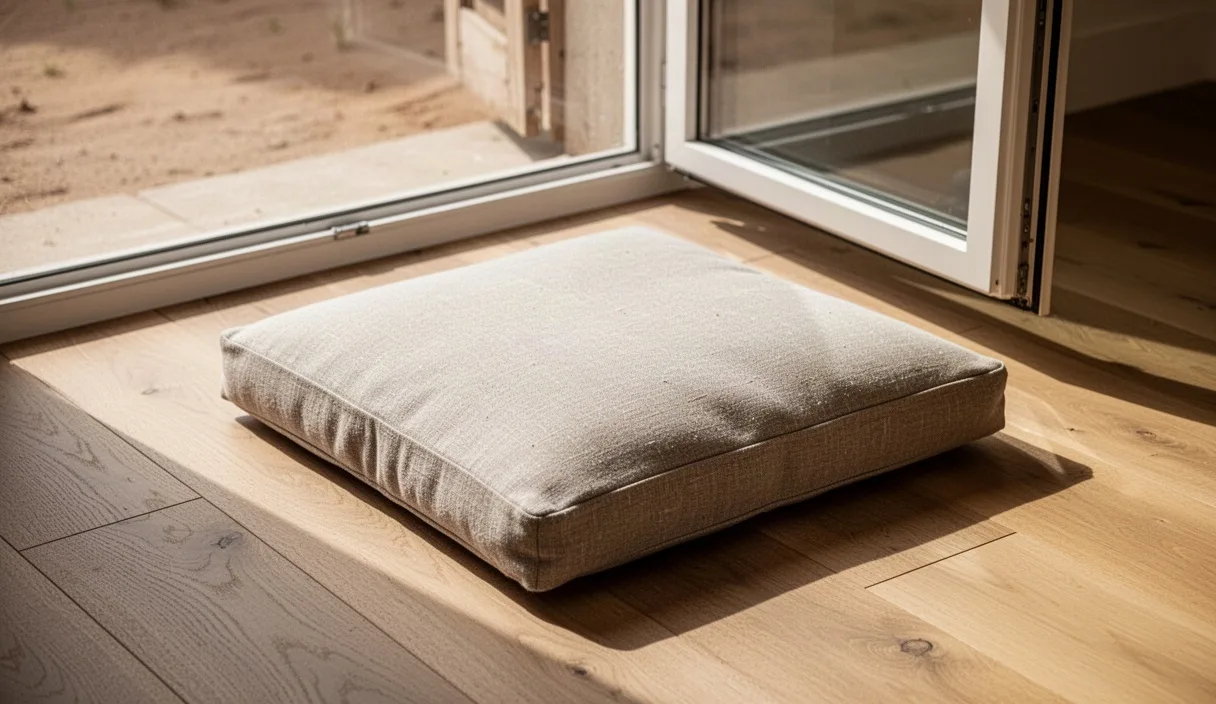
Keep a firm floor cushion and two yoga blocks near the living room rug. Having the equipment visible removes friction. When the tools are already on the floor, sitting there feels natural.
Common mistakes
Aggressive stretching leads to protective muscle guarding. When you push a joint past its current tolerance, the nervous system tightens the surrounding tissues. Move into shapes with curiosity rather than force. Sensation should remain dull and diffuse, never sharp or localized in a joint crease.
Holding the breath is another frequent error. Apnea signals stress to the brain. Keep your breath slow, diaphragmatic, and rhythmic. If your breathing stops, you have moved too deep into the shape.
Inconsistent practice also limits progress. Ten minutes on the floor every evening yields better tissue remodeling than sixty minutes once a week. Collagen remodeling takes months of regular, low-load signals.
Practical next steps
Start tonight with five minutes on the floor. Choose the supported deep squat or the ninety-ninety sit. Observe which hip feels more resistant. Note the sensations without judgment.
Track your floor time over the coming fourteen days. Aim for a total of fifteen minutes per day across two or three separate sessions. Consistency builds joint health quietly over time.
If you have a history of hip labral tears, bursitis, or surgical joint replacement, consult an orthopedist or physical therapist before starting these habits. A clinician can provide safe angles tailored to your specific anatomy.